
Quiet PV inverters and battery storage – and protect them from heat
Inverters whine at high frequencies, battery storage cooling runs day and night. Our enclosures damp exactly these tones and protect the units from sun, rain and hail at the same time.
A whine you cannot ignore
PV inverters are quieter than a heat pump – but they sound different. The power electronics switch in the kilohertz range, and the fans add to it. The high, tonal whine is especially noticeable when the inverter hangs on the house wall next to a terrace or bedroom.
Battery energy storage systems (BESS) run around the clock. Here it is mainly the air-conditioning and ventilation units of the containers that set the tone at night, plus converters and transformers with their typical hum.
- High frequencies: Typical inverter noise peaks lie at 16–18 kHz – clearly audible and annoying for many people.
- Tonality: A clearly audible tone attracts a penalty of 3 or 6 dB under the German TA Lärm.
- Heat: In direct sun, inverters reduce their output (derating) – a yield loss that adds up over the years.
- Weather: Rain, hail and dust wear on outdoor units and connections.
- Fire safety: No combustible insulation may be used at battery storage.
Two designs – for 1 to 5 inverters
For every inverter range in the catalogue there is a wall-mounted enclosure and a free-standing housing with a built-in mounting shelter.
Front enclosure
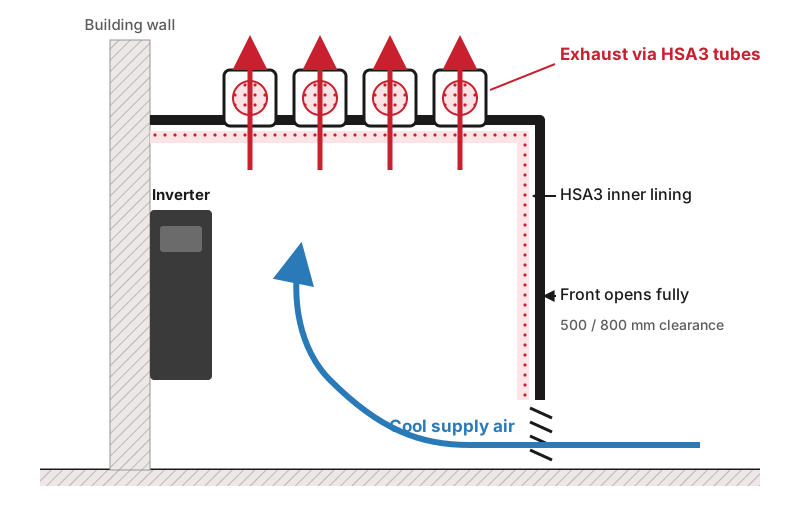
The enclosure is built in front of the wall-mounted inverter. Clearances to the outer edge: 500 mm left and right, 800 mm above (Premium 900 mm).
Housing with mounting shelter
For systems without a suitable wall, e.g. on open ground or roofs. The inverters hang on the shelter inside the housing, 600 mm apart.
Cool air in front, exhaust on top
Cool air is drawn in at the front bottom, flows past the inverter and leaves through HSA3 tubes in the roof (see section above). The front opens fully for service.
In the catalogue: Huawei, SMA, Fronius, Sungrow, SolarEdge, Kostal, GoodWe, Growatt, FoxESS and Victron – with enclosure dimensions, weight and fixed prices for 1 to 5 units, from approx. €4,400 net. For other inverters, enter the dimensions; the enclosure is designed live.
The enclosure for your inverter
Choose manufacturer and range, set quantity and design – dimensions, fixed price, specification text and BIM model instantly.
Noise control for BESS – non-combustible, no heat build-up
Battery storage is increasingly installed in commercial areas bordering residential housing, at grid nodes and next to PV parks. Its cooling runs day and night – and has to, because the cells need a constant temperature.
That is why we always design the noise control together with the air flow of the cooling units: no measure may route warm exhaust air back to the intake or push the pressure drop beyond the fans' reserve.
- Enclosures for single containers or whole rows, open at the top via tube silencers
- Silencers directly in front of ventilation openings and AC units
- Noise barriers towards residential buildings when only one side is critical
- HSA3 in A1 – non-combustible, no fibres, weatherproof
What we need for the design
- Manufacturer and type of the storage system or containers
- Position and air volume of the AC and ventilation units
- Sound power (data sheet or measurement), operating hours
- Site plan with distance to the nearest residential building
There is no fixed-price catalogue for BESS: we design per project. The free configurator gives a first guide price.
Frequently asked questions
Doesn't the inverter get too hot inside the enclosure?
No – the enclosure is designed around cooling. Cool air enters at the front bottom and flows past the unit, the warm air leaves through the tubes in the roof. The enclosure also shades the inverter; without direct sun it runs cooler.
Does the enclosure help against output loss in summer?
It can. Many inverters reduce their output when they get too hot. If yours currently hangs in full sun, it benefits from the shade of the enclosure. The effect depends on the unit and the site.
Can I reach the display and connections?
Yes. The front opens fully. Cables are routed from below or the side as usual.
How many inverters fit in one enclosure?
One to five units side by side, in both designs. Larger systems are split across several enclosures or engineered per project.
Why is A1 so important at battery storage?
Because no insulation may burn along in a fire. HSA3 is non-combustible to class A1 (EN 13501-1) and contains neither mineral wool nor foam.
More solutions
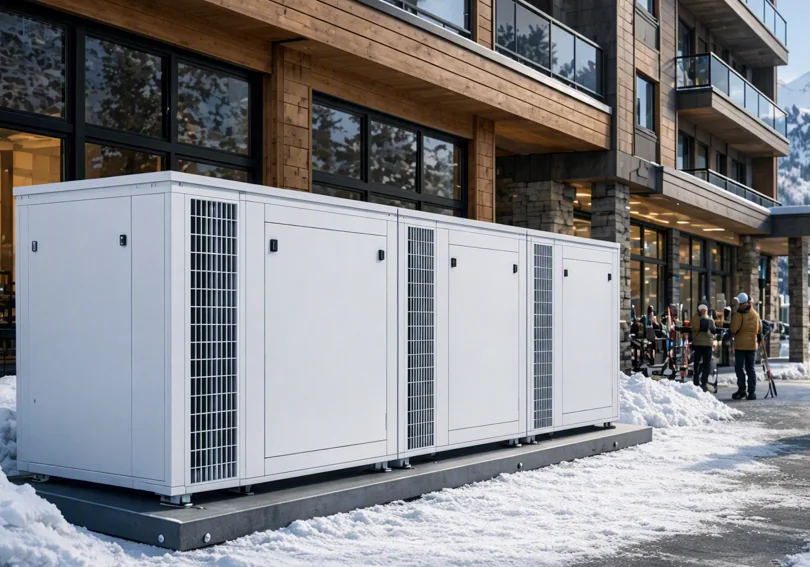 H-Series · small units
Heat pumps & air conditioning
Air-to-water heat pumps, split and AC units, pool heat pumps. Standard sizes H1–H12 or custom-made, up to −25 dB(A).
View solution →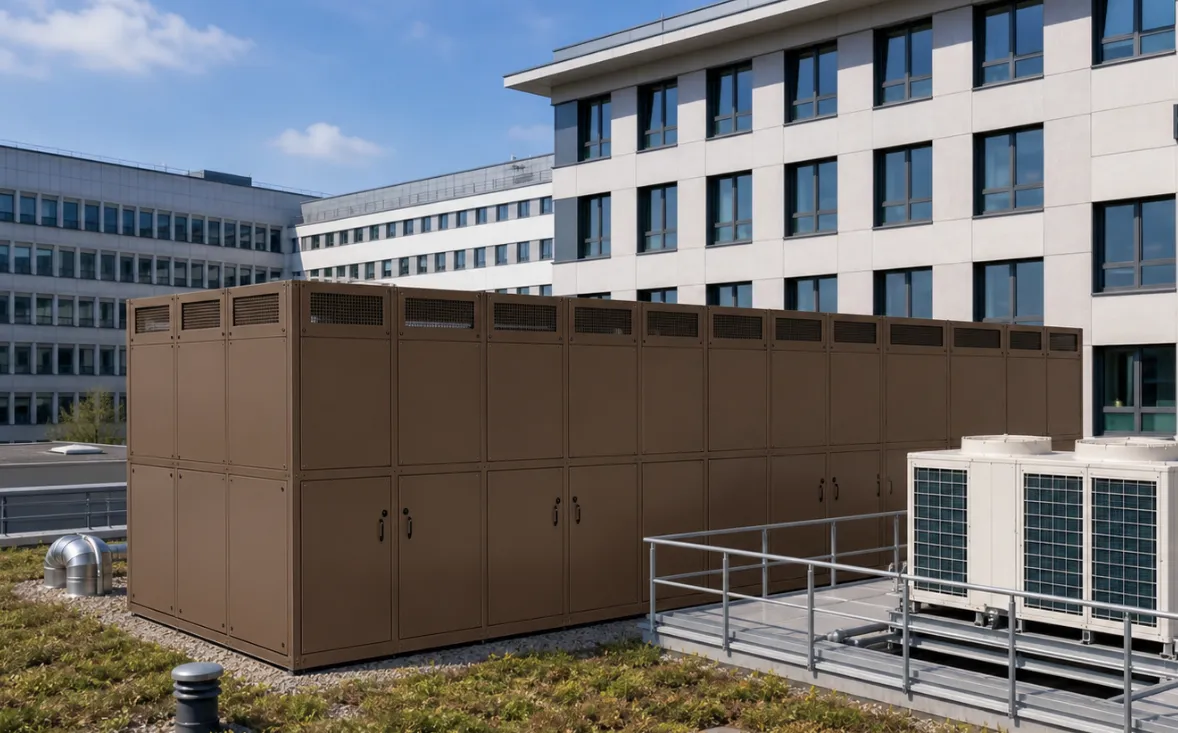 V-Series · standard product
VRF/VRV systems
Standard enclosures by model for Daikin, Mitsubishi Electric, Panasonic, LG, Samsung, Toshiba and Haier – at fixed prices.
View solution →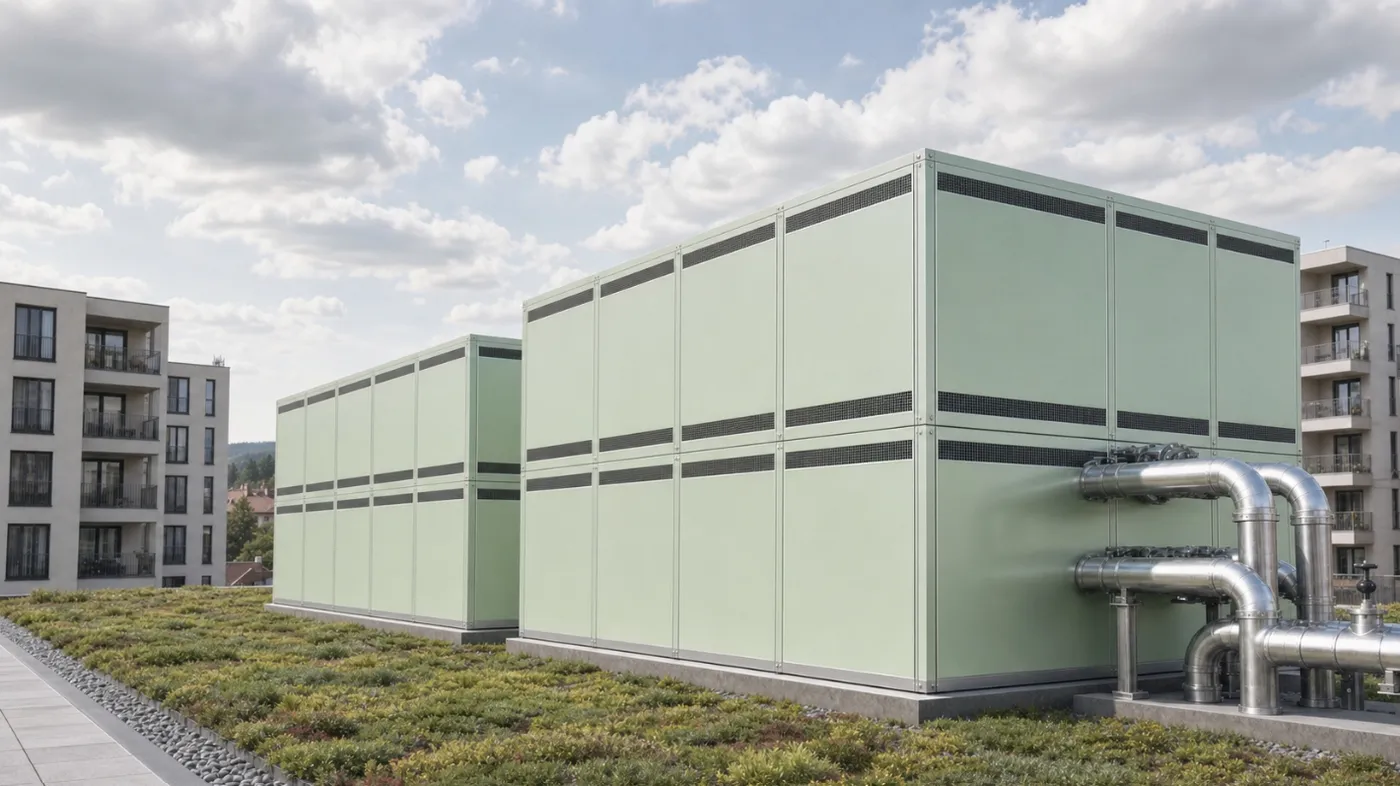 CM-Series · large units
Chillers & large heat pumps
Chillers, dry coolers, large heat pumps and cascades. Acoustics and air flow engineered together, A1 non-combustible.
View solution →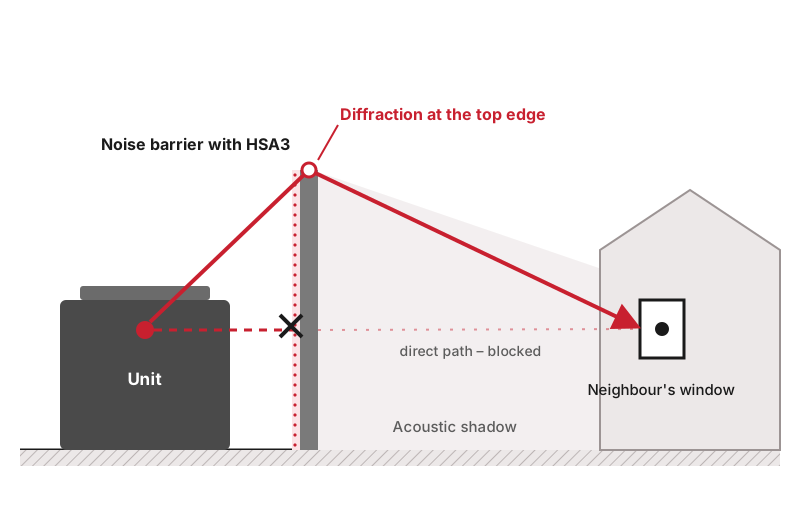 Wall-Series
Noise barriers
Straight, L-shaped, U-shaped or freely planned, with HSA3 absorber. Screening, wall height and wind load instantly.
View solution →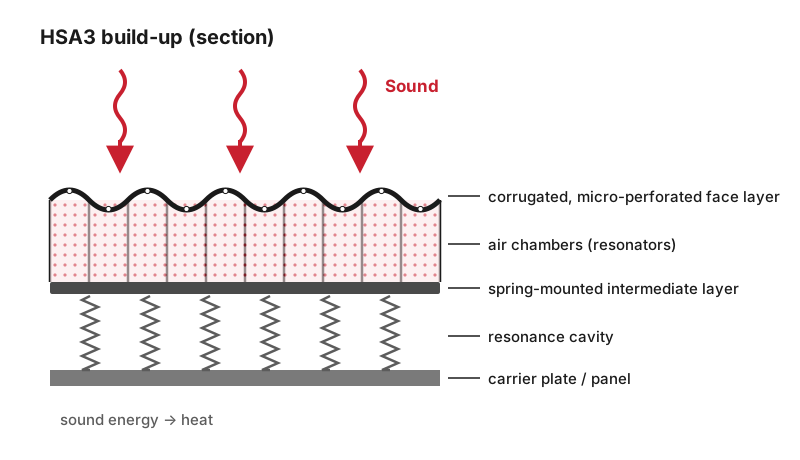 Material
HSA3 – the material in every enclosure
Acoustic meta-metal instead of mineral wool: non-combustible A1, weatherproof, strong at low frequencies.
HSA3 in detail →Request a project
Send us the unit type, quantity and location – or get a budget price straight from the configurator.
ForCoTech · Silent-Mode
Via Trento 22 · 23875 Osnago (LC) · Italy
E-Mail: info@forcotech.com